
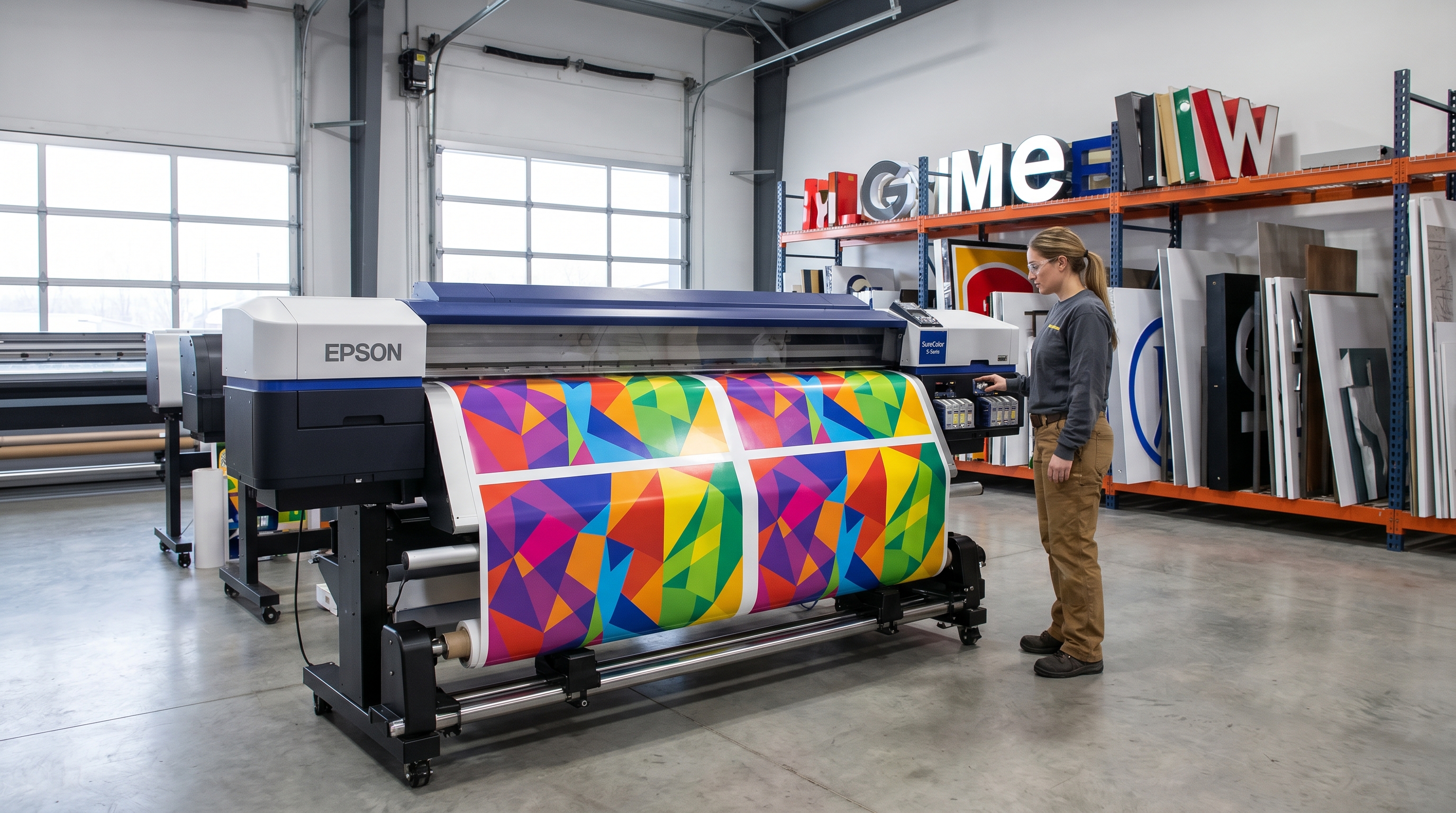
Most people have no idea how a business sign is actually made. The illuminated channel letters on a restaurant, the full-color wrap on a delivery van, the frosted vinyl on a law-office window — each involves completely different materials, equipment, and skills. Understanding the production process helps business owners have sharper conversations with their sign shop, and helps shop owners explain what they're really selling.
This guide walks through every major sign category and how it's produced — then how a shop keeps all of it moving at once. For what each type costs, keep our complete guide to sign pricing alongside it.
Sign Production at a Glance
| Sign type | How it's made | Key equipment | Production time |
|---|---|---|---|
| Channel letters | Bend aluminum, fit LEDs, mount | CNC letter bender, router/laser | 8–16 hrs + install |
| Vehicle wrap | Print on cast vinyl, laminate, apply | Wide-format printer, laminator | 6–10 hrs |
| Flat panel (ACM/acrylic) | UV print direct, or printed vinyl applied | UV flatbed or printer + plotter | 1–4 hrs |
| Cut vinyl / window | Plot, weed, transfer | Vinyl plotter | under 1–2 hrs |
| Monument / dimensional | Weld, route, finish, install on footing | Welder, CNC router | Days–weeks |
Channel Letter Signs
Channel letters are the most complex commonly produced sign type. Each letter is a small fabricated enclosure: a bent aluminum return (the sidewall), a face of colored acrylic, and an interior fitted with LED modules and a share of a power supply. Aluminum coil is bent to the letter profile on a CNC bender, corner-joined, primed and painted; the face is routed or laser-cut to match; LEDs are installed and wired; and on install day the letters are mounted to a raceway or directly to the building and connected to power.
A ten-letter sign takes a skilled shop 8–16 hours of production plus installation. For the cost breakdown, see how much channel letter signs cost; for the fabrication in depth, see how channel letters are made and how they work.
Vehicle Wraps
A wrap begins as a digital design built on the vehicle's exact template and ends as laminated cast vinyl adhered to the painted surface. The artwork is printed on a wide-format eco-solvent or latex printer onto cast film, laminated for protection, and allowed to outgas before installation. Installation is the most skill-dependent step — surface prep, panel-by-panel squeegee application, relief cuts at recesses, and post-heating to lock the vinyl onto curves. A full cargo van runs 6–10 hours for an experienced installer. The complete walkthrough: the complete vehicle wrap process.
Flat Panel Signs: UV vs Vinyl
Flat panels — ACM, PVC foam board, acrylic, coroplast — are produced one of two ways. Printed vinyl is output on a wide-format printer, laminated, and applied to the substrate: economical, field-replaceable, and the standard for outdoor panels. Direct UV printing cures ink straight onto the substrate under UV lamps — a more integrated look with no vinyl edge to lift, ideal for rigid surfaces like acrylic, dibond, and glass. The full breakdown: UV printing for signs.
Cut Vinyl Graphics
Cut vinyl (window lettering, simple logos, door graphics) skips printing entirely. A vinyl plotter cuts the design from solid-color film, the excess is weeded by hand, application tape is laid down, and the design is transferred to the surface. It's the fastest method for simple single-color graphics, produces the sharpest possible edges, and lasts a long time outdoors (3–5 years calendared, 7+ years cast). When to use it versus printing: cut vinyl vs printed graphics.
Monument and Dimensional Signs
Monuments lean closer to metalworking and construction than print. Aluminum or steel frames are welded, painted, and fitted with routed or printed faces; dimensional letters are routed from acrylic, aluminum, or HDU foam, then painted or polished. Installation involves foundation work — direct-bury posts, concrete footings, or anchor bolts — and usually permits and engineered drawings for wind-load compliance, which is why the installed cost climbs (see the pricing guide).
The same word — "sign" — covers a plotted window decal and a welded, foundation-set monument. That's why two quotes for "a sign" can be a hundred dollars apart or ten thousand.
Managing Production Across Job Types
A shop running channel letters in fabrication, a wrap on the press, and a vinyl order on the plotter — all at once — needs to see every job's stage at a glance. A shared spreadsheet breaks down fast when jobs sit at different stages and different people update them. Sign shop software like SIGNEXA gives every job a stage, a deadline, and an owner on a real-time production board the whole team can see without a single phone call. Try it free.