
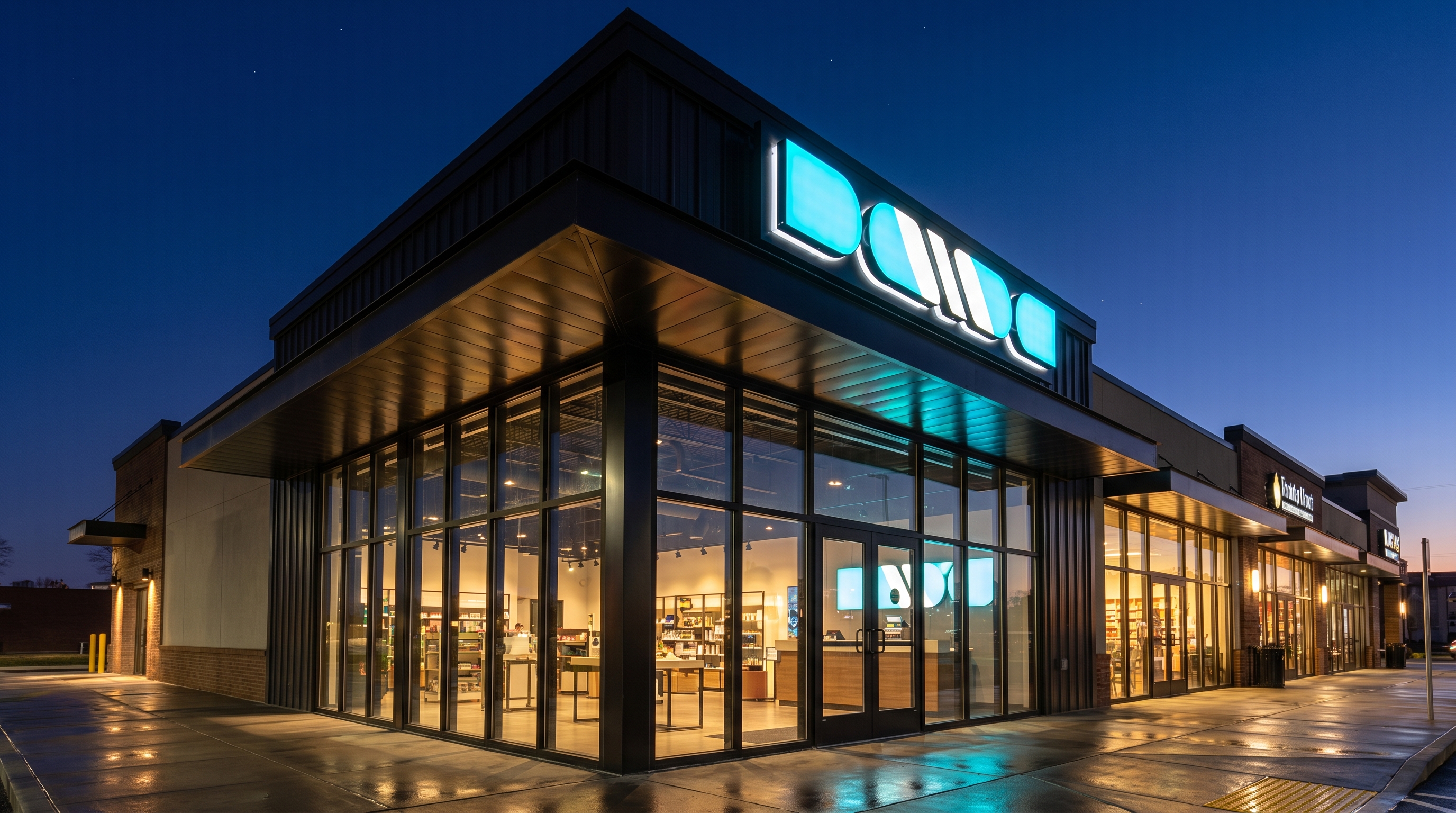
Ask ten sign shops what a sign costs and you will get ten different answers — and a knot in your stomach. A storefront sign can run $300 or $30,000, and most shops are genuinely bad at explaining the gap. This guide closes it.
Below are real 2026 price ranges for every major category of commercial signage in the United States, drawn from working sign shops and current published pricing. We show what drives each number, what is included versus what gets tacked on later, and — if you run a shop — where your own rates should land. It is built to be the one sign pricing reference you actually keep open.
How Sign Shops Actually Price Work
Before any category-by-category numbers, understand the engine underneath every quote. Whether it is a $90 yard sign or a $90,000 pylon, the price is built from the same four parts:
- Materials — substrate, vinyl, ink, LEDs, aluminum, acrylic, hardware. The raw goods that physically become the sign.
- Labor — design, production, fabrication, and installation time, billed at the shop's rate (typically $65–$125 per hour in the US).
- Overhead — rent, equipment, utilities, insurance, software: the shop's fixed costs spread across every job.
- Margin — the profit that keeps the business alive. Healthy sign shops target 40–55% gross margin on production work.
This matters to you as a buyer because it tells you where a high quote comes from — almost always labor (complex fabrication or installation) or materials (large, illuminated, or weatherproof construction) — and why a surprisingly low quote should make you nervous. When a number looks too good, something has usually been removed: durable materials, professional installation, or permitting. We will come back to this.
Sign Pricing at a Glance
Here is the whole market on one screen. Use it to sanity-check any quote, then jump to the section below for the detail behind each line.
| Sign type | Typical 2026 range | Priced by |
|---|---|---|
| Cut vinyl / window lettering | $12–$25 / sq ft | square foot |
| Yard signs (coroplast) | $8–$25 each | piece / quantity |
| Vinyl banner (13 oz scrim) | $6–$12 / sq ft | square foot |
| Flat panel (ACM, acrylic, PVC) | $12–$30 / sq ft | square foot |
| Window perf / frosted vinyl | $18–$35 / sq ft | square foot installed |
| Dimensional letters (lobby) | $45–$95 / letter | per letter installed |
| ADA / room ID signs | $85–$200 each | per sign |
| Channel letters (storefront set) | $4,000–$12,000 | installed set |
| Vehicle wrap (full) | $3,200–$9,500 | per vehicle |
| Monument sign | $5,000–$30,000+ | installed |
| Pylon / pole sign | $10,000–$50,000+ | installed |
| Digital message center (EMC) | +$10,000–$20,000 | by display size |
Channel Letter Signs
Channel letters — the three-dimensional illuminated letters on nearly every storefront in America — are the most common and most misunderstood sign type. There is no honest flat "price per letter," because a simple block "I" takes a fraction of the material and labor of a looping script "S." Shops quote the set, not the alphabet.
For a small-to-medium business, the realistic sweet spot for a complete, professionally installed sign is $4,000–$8,000. A larger retail storefront set runs $7,000–$12,000, and elaborate custom builds climb past $20,000. As a rough planning guide, individual front-lit letters land in these ranges:
| Letter height | Per letter (front-lit) |
|---|---|
| 8 inch | $175–$225 |
| 12 inch | $260–$340 |
| 18 inch | $390–$510 |
| 24 inch | $520–$680 |
| 36 inch | $900–$1,300 |
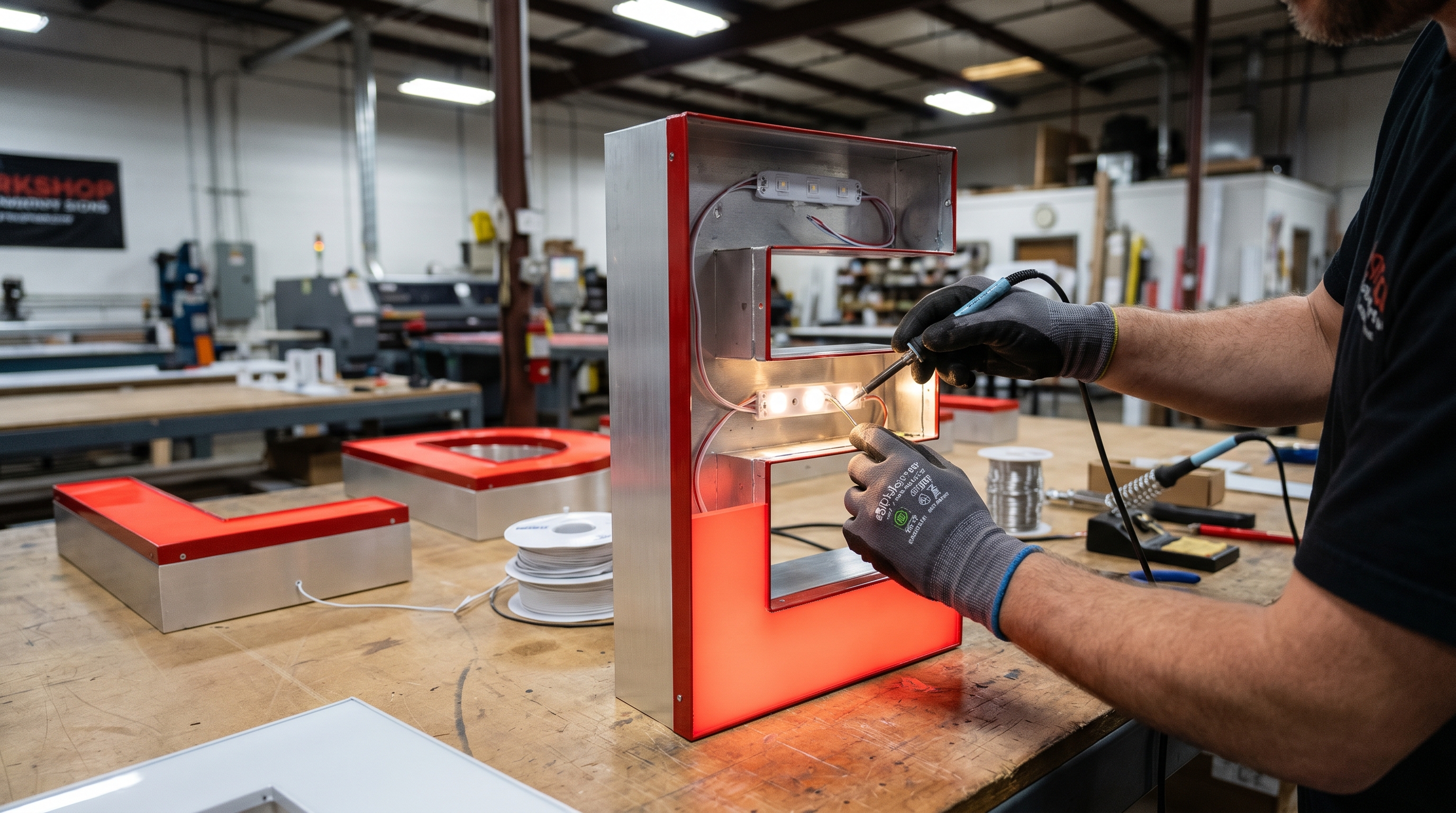
Halo-lit (reverse channel) letters — where the light glows around the letter against the wall — add roughly 20–30% over front-lit for the extra metalwork and standoff mounting. Direct mounting (each letter fixed to the wall individually, no visible raceway) adds about 15–25% to installation versus a raceway. And permits, new electrical service, and lift equipment are extra when the site requires them.
Want the full breakdown by size, illumination, and mount? See How Much Do Channel Letter Signs Cost? — and if you are curious how they are built, Channel Letter Signs: How They Are Made.
Vehicle Wraps
A wrapped vehicle is one of the cheapest forms of advertising per impression in existence — a single van can generate millions of views a year. Price is driven first by vehicle size, then by how much of it you cover.
| Vehicle | Full wrap | Partial wrap |
|---|---|---|
| Sedan / compact | $3,200–$4,500 | $1,200–$2,400 |
| SUV / crossover | $3,800–$5,200 | $1,500–$2,800 |
| Cargo van (Transit / Sprinter) | $4,500–$6,500 | $2,200–$3,500 |
| Box truck (16–24 ft) | $6,500–$12,000 | $3,000–$6,000 |
| Semi-trailer (48–53 ft) | $14,000–$20,000 | — |
A color-change wrap (solid film, no printing) runs $2,500–$4,500 for a typical car; specialty finishes like chrome or color-shift add 30–60%. A partial wrap on a white van — rear and both sides — can deliver about 80% of a full wrap's impact at 50–60% of the cost, which makes it the smart starting point for budget-conscious businesses.
The reason one shop quotes $4,000 and another $6,500 for "the same" van usually comes down to vinyl grade (economy calendared film lifts within a year or two; premium cast vinyl conforms and lasts) and installation skill. The full guide: Vehicle Wrap Cost: Every Vehicle Type Priced, and the production side: The Complete Vehicle Wrap Process.
Monument & Pylon Signs
These are the high-ticket, permanent identification signs at the entrances to buildings, business parks, and subdivisions. Pricing swings hard on material and whether a digital display is involved.
| Sign | Installed range |
|---|---|
| Simple aluminum / PVC monument | $5,000–$15,000 |
| Mid-range monument with lighting | $10,000–$30,000 |
| Custom brick / masonry monument | $30,000–$65,000+ |
| Single-tenant pylon / pole sign | $10,000–$25,000 |
| Multi-tenant cabinet pylon | $25,000–$50,000+ |
| Add: electronic message center (EMC) | +$10,000–$20,000 |
Two things buyers routinely under-budget: installation (foundation, footings, and crane work alone run $2,000–$15,000+) and engineering and permits for wind-load compliance. A monument quote that does not mention foundation or permitting is incomplete — ask before you sign.
Banners & Wide-Format
Banners are the most price-shopped sign product on earth, which is exactly why the numbers look so inconsistent. The key is knowing what you are comparing.
| Product | Local shop price | Online / gang-run |
|---|---|---|
| 13 oz scrim vinyl banner | $6–$12 / sq ft | $2–$5 / sq ft |
| Mesh banner (windy sites) | $9–$15 / sq ft | $4–$8 / sq ft |
| Retractable banner stand + print | $185–$500 | $90–$200 |
| Fabric tension display (10 ft) | $850–$1,500 | $500–$900 |
Online printers win on raw price because they gang dozens of orders onto one sheet with no proofing and no service. A local shop proofs your file, color-matches your brand, catches errors before they print, and turns work around same-day when you need it. For a grand opening or a trade show, that service premium is earned. The deep dive: Banner Printing Prices: What Businesses Pay in 2026.
Interior, ADA & Window Graphics
The signage most people forget to budget for — and a steady, high-margin category for the shops that do it well.
| Product | Typical price |
|---|---|
| ADA room ID sign (Braille, Grade 2) | $85–$200 each |
| Lobby dimensional letters | $45–$95 / letter installed |
| Cut vinyl window lettering (storefront pair) | $175–$550 |
| Window perf / frosted privacy vinyl | $18–$35 / sq ft installed |
| Wayfinding program (small office building) | $2,500–$15,000 |
Why Two Quotes for the "Same" Sign Differ by Thousands
This is the question that brought most readers here, so let us answer it plainly. When two quotes are far apart, they are almost never for the same sign. The cheaper one has usually changed one or more of these:
The cheapest quote and the most expensive quote are rarely the same product wearing different prices — they are different products wearing the same description.
- Material grade. Economy calendared vinyl versus premium cast; thin aluminum versus heavy-gauge; standard LEDs versus modules rated for 50,000 hours.
- What's included. One quote bundles design, installation, electrical, and permits; the other quietly leaves them off and bills them later.
- Illumination quality. Properly spaced LEDs and a correctly sized power supply versus an under-lit, under-powered build that fails early.
- Warranty and service. A 1–3 year warranty and a shop that answers the phone versus a one-and-done transaction.
The fix as a buyer: make every quote spell out materials, what is included, and warranty as line items. Then you are comparing signs, not just numbers.
For Sign Shops: Healthy Margins by Product
If you run a shop, here are the gross-margin bands well-run US sign shops hold by category. Use them to check whether your own pricing is leaving money on the table.
| Product category | Healthy gross margin |
|---|---|
| Design / art services | 60–75% |
| Cut vinyl graphics | 55–70% |
| Wide-format print / banners | 45–60% |
| Vehicle wraps | 45–58% |
| Channel letters (fabricated) | 40–55% |
| Monument / dimensional | 38–52% |
If you are landing below these consistently, the cause is usually quoting from memory rather than from a real cost-built price list. Our guide to fixing that: How to Quote Sign Jobs Without Losing Margin.
How to Get an Accurate Quote Fast
You can shortcut the back-and-forth by bringing three things to any sign shop: a photo of the location where the sign will go, a vector logo file, and a clear timeline. With those, a well-run shop can quote in minutes instead of days — because the slow part of quoting was never the math, it was chasing missing information.
That speed is exactly what modern sign shop software unlocks. SIGNEXA lets shops build templated product pricing with their own materials, labor rates, and margins baked in, generate a branded estimate in minutes, and convert approved quotes straight into job tickets — no re-entry, no rework. If you want the broader landscape first, see Best Sign Shop Management Software. Otherwise, try SIGNEXA free and feel how fast quoting can be.