
Channel letters are the most recognized form of commercial signage in America — the three-dimensional illuminated letters on nearly every retail strip, restaurant, and professional building. They are also one of the most frequently Googled sign types for price, because getting a straight number out of a sign shop can feel like pulling teeth.
This guide gives you the actual numbers: per-letter pricing by size, total set ranges, how illumination and mount style move the price, and what installation, electrical, and permits add on top. Whether you are a business owner planning a storefront sign or a shop checking your rates against the market, this is the reference. For the wider picture across every sign type, start with our complete guide to sign pricing.
What You Are Actually Paying For
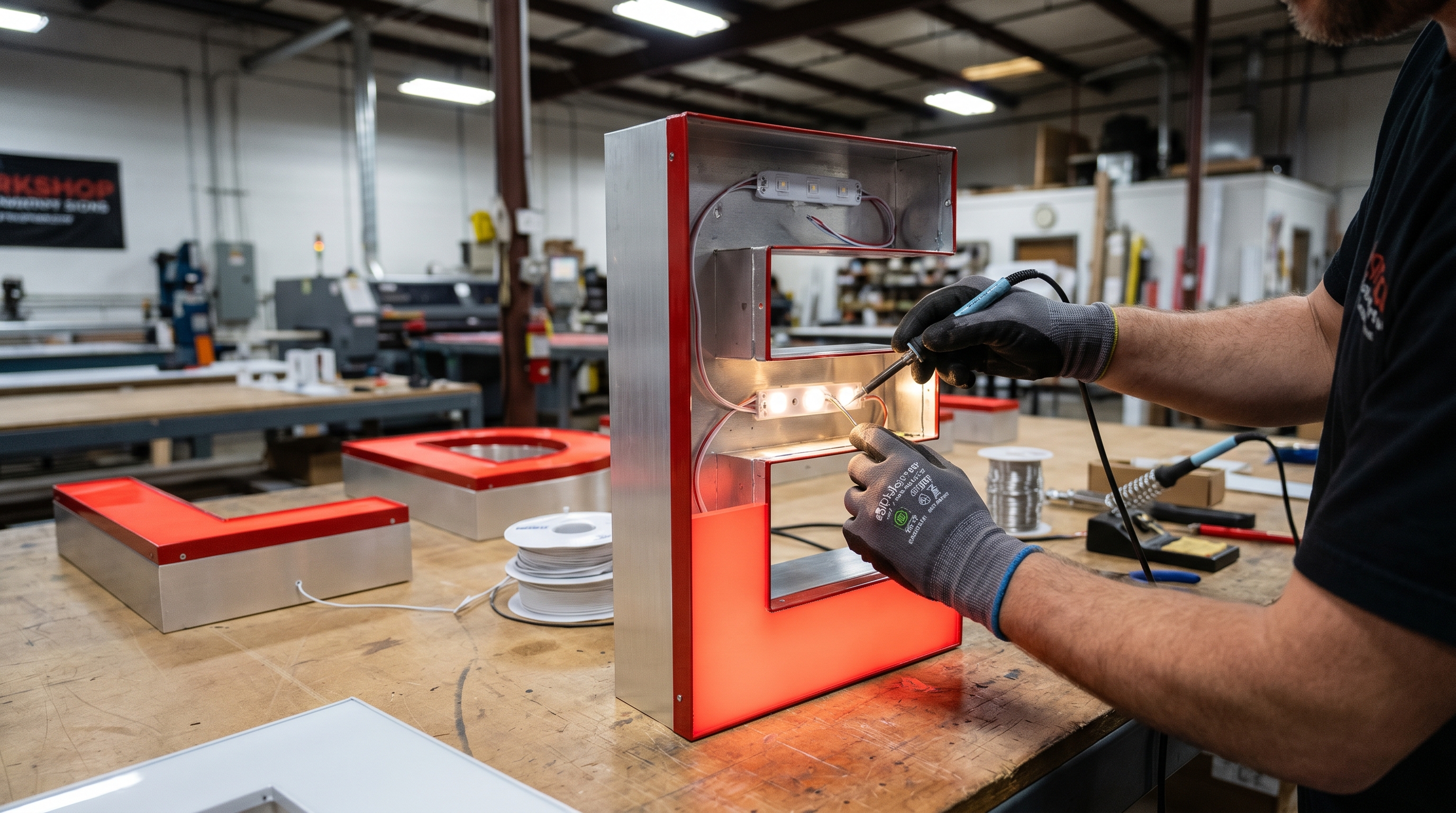
A channel letter is a small fabricated metal box. Each one has an aluminum return (the sidewall that gives the letter its depth, usually 3" or 5"), a face (translucent colored acrylic on front-lit letters), a trim cap that joins the two, LED modules inside, and a share of the power supply. Front-lit letters glow forward through the acrylic; halo-lit (reverse channel) letters are solid-faced and throw light backward onto the wall.
The reason there is no honest flat "price per letter" is that the letters are not equal. A block "I" uses a fraction of the metal and bending time of a looping script "S." So shops quote the set, and the per-letter numbers below are planning averages, not a fixed menu.
Per-Letter Pricing by Size
These 2026 US ranges are for front-lit LED letters in standard aluminum fabrication with a painted return, colored acrylic face, LED modules, and a share of the power supply.
| Letter height | Front-lit (raceway) | Front-lit (individual mount) | Halo-lit |
|---|---|---|---|
| 8 inch | $175–$225 | $210–$275 | $250–$325 |
| 12 inch | $260–$340 | $310–$400 | $375–$480 |
| 18 inch | $390–$510 | $460–$600 | $550–$720 |
| 24 inch | $520–$680 | $610–$800 | $730–$960 |
| 36 inch | $900–$1,300 | $1,050–$1,500 | $1,250–$1,700 |
Per-letter cost drops slightly across a longer word (better production efficiency) and rises for complex shapes. Three things move a letter beyond the table: font complexity (script and decorative letterforms take 2–3× the fabrication time of block letters), return depth and accent colors (painted-to-match returns cost more than standard white), and logo elements — every shape or icon is quoted as its own letter, not thrown in free.
What a Full Set Costs
A ten-letter business name is the most common reference point. These ranges include a standard raceway mount and connection to an existing electrical circuit.
| Set (10 letters) | Illumination | Typical installed range |
|---|---|---|
| 12 inch | Front-lit | $2,600–$3,400 |
| 18 inch | Front-lit | $4,200–$5,500 |
| 24 inch | Front-lit | $5,800–$7,200 |
| 18 inch | Halo-lit | $5,000–$6,500 |
| 18 inch | Complex font / custom | $8,500+ |
Front-Lit vs Halo-Lit
Front-lit is the standard: light shines forward through a colored acrylic face. It is the brightest, most readable, and least expensive option — the right call for most retail and roadside applications.
Halo-lit (reverse channel) letters are solid-faced metal mounted on standoffs, with the LEDs glowing onto the wall behind them. The effect is the letters appearing to float in a ring of light. It is a premium, understated look — add roughly 20–30% over front-lit for the extra metalwork and mounting. Combination (front + halo) letters light both ways and cost the most of all. A few shops still offer open-face glass neon, but maintenance cost has made it a rare specialty choice.
Raceway vs Direct Mount
Raceway mount attaches the letters to a painted aluminum box that houses the power supplies and wiring; the raceway bolts to the wall as one unit. It is faster to install, easier to service, and cheaper — and the raceway is painted to disappear against the wall or letters.
Direct (individual) mount fixes each letter to the wall on studs with the wiring run through the building. The result is cleaner — no visible box — but it requires more wall penetrations and labor, adding about 15–25% to the install versus a raceway.
The cheapest channel letter quote and the most expensive one are rarely the same sign — they are different builds wearing the same letters.
What Installation, Electrical, and Permits Add
This is where "surprise" costs live, so a good quote spells each line out. Typical 2026 add-ons:
| Line item | Typical cost |
|---|---|
| Ground-level install (under 12 ft) | $350–$750 |
| Second-story install (12–20 ft, lift) | $600–$1,200 |
| High install (20 ft+, boom lift day) | $1,200–$3,500+ |
| Electrical termination (licensed) | $300–$700 |
| New circuit (trench / conduit) | $800–$2,500+ |
| Permit + engineered drawings | $200–$1,500+ (varies by city) |
The shop discipline that separates a clean job from a callback: itemize, don't bundle. A quote that breaks out letters, raceway, electrical, install, and permit wins more business because the buyer can see exactly what they're getting — and the shop doesn't eat a forgotten lift day.
How to Get the Most Sign for Your Budget
If the quote lands above budget, these levers move the number without gutting the result: drop letter height 2–4 inches (often invisible from the road), choose front-lit over halo, pick a clean sans-serif over a script font, opt for a raceway over individual mount, or go non-illuminated — powder-coated dimensional letters run 40–60% of illuminated pricing and look sharp in shaded or interior settings. A good shop will walk you through these tradeoffs rather than silently cutting corners.
Curious how these letters are actually built, bent, and wired? See how channel letters are made. And if you run a shop, accurate channel letter quoting by size, mount, and illumination is exactly what SIGNEXA templates handle — itemized estimates in minutes instead of an afternoon. For the discipline behind it, read how to quote sign jobs without losing margin, or start a free trial.